Bali Waste Management
Bali Waste Management – thankfully, this week, there is some good news coming from Bali about waste management that is giving us all, tourists included, a glimmer of hope.
Bali’s issues with waste management are well-documented. With the provincial government set to close the island’s biggest open landfill is set to close once and for all by the end of July.
Back in April, the site stopped accepting mixed and organic waste, which triggered a swathe of problems out in the community.
One of the biggest issues right now is that there is not sufficient infrastructure to support the transition to a full zero-waste or circular-based system.
A new Waste to Energy facility is set to be built that will tackle most of the province’s problems, but that won’t even start to be constructed for months, and won’t open until the end of 2027.
While there are recycling facilities across communities in Bali, these sites cannot contend with the volume of waste that is being produced both by households and by businesses.
Bali’s Kutuh Village, best known for tourist attractions like Pandawa Beach, has spoken to the media this week to confirm that they have successfully solved their community’s trash problem.
Kutuh Village is home to a Tebo Kauh Reuse, Reduce, Recycle Waste Processing Facility (TPS3R), and now claims to have implemented the zero-waste practice across the community, meaning waste is disposed of at the source without burdening other areas.
Speaking to reporters, the Head of Kutuh Village, Wayan Mudana, said that waste management efforts had actually begun in 2021 and that finally the system has found a balance point. It has taken five years for the community to establish adequate processing facilities and the supporting system across the village, so waste management can be carried out in the most efficient way.
Mudana told reporters, “Since 2021, we’ve been trying to manage waste effectively without polluting other villages. But it’s not easy; honestly, managing waste isn’t easy.”
According to Mudana, this whole approach has been a team effort, across the community, with businesses and with government agencies. He noted that waste management at the TPS3R is supported by the likes of the Family Welfare Movement (PKK), Community Empowerment Institutions (LPM), traditional village council, and other community groups.
He explained how the zero-to-landfill approach has been possible by creating change through incentives within the community. Mudana shared, “Now we have TPS3R. There’s a plastic exchange program there, where residents can collect waste that has economic value.”
Main Article: Bali Waste Management
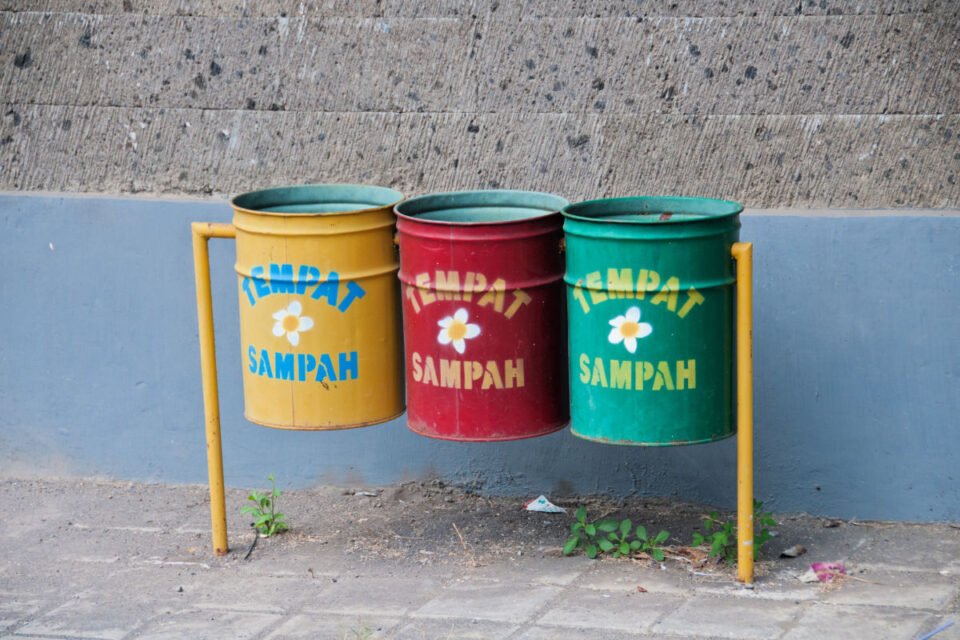
Perhaps one of the biggest takeaways from Kutuh Village, for both local communities and international residents in Bali, is that the village developed a modern composting program and distributed compost bins to the community.
The program allows organic waste to be handled directly at home, thereby reducing the processing burden at the TPS3R and, in turn, at the big landfill sites across the province.
Kutuh Village has also scaled the waste management system; only a year or so ago, the volume of waste handled ranged from 9 to 12 tons per day, but now it reaches around 15 to almost 20 tons per day.
This volume includes both household waste and waste from various businesses and accommodations in the Kutuh Village area.
He shared, “All waste in Kutuh Village is our responsibility. We do not accept waste from other villages.” Adding “Now, the waste in Kutuh Village is clean. It no longer pollutes other villages and is no longer sent to Suwung or other locations.”
He noted, “The biggest challenge is human resources and the public mindset. How to change the perception that waste is a shared responsibility, not just the government’s.”
Concluding, “We hope the community will continue to support source-based waste management. Let’s work together to keep Kutuh Village zero waste, because waste is our shared responsibility.”
Main Article: Bali Waste Management
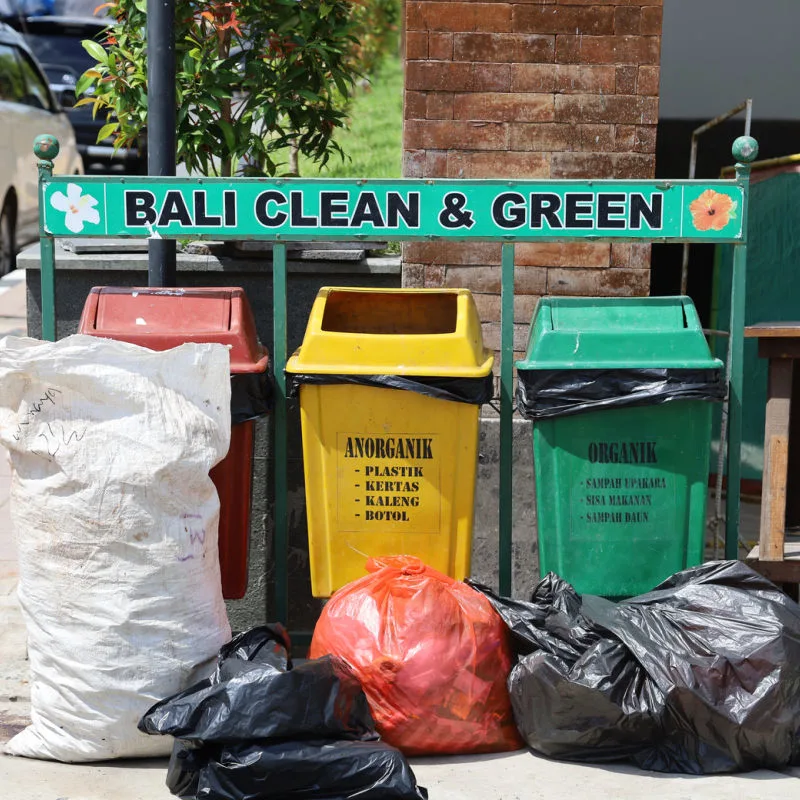
Bali Tourist Spending Habits
The global economic situation is a big headache right now…to say the least. For millions of families in Indonesia, the weakening of the Indonesian Rupiah against the US dollar has taken the cost-of-living crisis to the next level.
The situation is also known to impact tourist spending, for better and for worse.
It has been confirmed this week by the Bali Province Central Statistics Agency (BPS) that changes in the US dollar exchange rate against the rupiah have affected the nominal spending of foreign tourists in Bali, with average spending increasing to IDR 2.11 million per night.
Speaking to reporters, the Head of BPS Bali, Agus Gede Hendrayana Hermawan, said, “They [foreign tourists] are fortunate because the exchange rate has risen. Even though they spend less money, they actually get better facilities.”
He confirmed that foreign tourist spending in Bali in 2025 increased by IDR 2.11 million per night, an increase of IDR 60,000 compared to 2024, which reached IDR 2.05 million.
International tourists in Bali are also spending more than international tourists visiting other areas of Indonesia. Hermawan explained that the national average is IDR 2.02 million per night.
The updates from the Central Statistics Agency come as leaders across the tourism sector are working to find new ways to attract more high-spending tourists to Bali. Ideas have included expanding the visa-free travel policy to include more countries.
The Chairman of the Indonesian Cyber Media Union (SMSI) of Bali Province and Public Communication Observer, Emanuel Dewata Oja, spoke to reporters on Thursday, 25th June, following updates from the Indonesian Immigration.
Oja responded to comments made by the Director General of Immigration Hendarsam Marantoko, who asked the government to re-evaluate plans to grant visa-free visits to tourists from eight countries.
Main Article: Bali Waste Management

He argued that a similar policy, implemented in 2016, had no significant impact on increasing the country’s foreign exchange and, in 2026, potentially posed a number of security risks.
Oja disagrees and feels that the return of a wider visa-free visitor policy could help incentivize more tourists to visit, and by removing the first financial barrier to entry, actually end up with more tourists who are spending more.
Oja explained, “If a tourist pays Rp 500,000 for a visa but cancels their visit due to procedures deemed impractical, the country could potentially lose millions of rupiah in tourist spending.”
“Consider some of the world’s top tourist destinations, such as Thailand, Malaysia, and Singapore. These countries have long utilized visa-free policies as a tool to increase destination appeal and strengthen international connectivity.”
Adding “This is one perspective that cannot be ignored if we truly want to be winners in global competition.”
Noting “The [visa-free] policy has many implementation schemes. South Korea, for example, implements visa-free travel for certain groups of tourists. China provides visa-free travel for transit travelers, while Vietnam offers visa-free travel for certain destinations. So, there are many visa-free travel schemes that can be implemented.”
For tourists traveling to Bali in the coming weeks, the situation regarding visas remains the same. Most international tourists visiting Bali, including those from Australia, China, India, most European countries, and the USA, must apply for the Visa on Arrival, or the eVisa on Arrival.
This visa costs IDR 500,000 and is valid for 30 days. It can be extended once for a further 30 days. Tourists can apply for the eVisa on the Official Indonesia Immigration website, up to 48 hours before arrival in Bali; however, here at The Bali Sun, we recommend making the application at least 7 working days prior to travel.
Of course, with the economy in flux, and immigration changes on the horizon, Bali tourists can trust that we here at The Bali Sun will be on hand reporting on all the latest news to make sure that everyone has a safe and comfortable stay on the island, and with the US dollar strengthening against the rupiah, there are certainly more travel deals to be found…watch this space!
Main Article: Bali Waste Management

Bali Rising Fuel Costs
Rising fuel prices have been the biggest topic of conversation in Bali’s tourism sector over the last few weeks.
It’s been a tough moment for many tourism businesses, what with the weakening of the rupiah against the US dollar and the end of fuel subsidies. The concern for tourists is that the cost of visiting the island will increase.
Speaking to reporters, the Head of the Bank Indonesia (BI) Representative Office for Bali Province, Achris Sarwani, explained that the ability to respond to rising fuel prices depends heavily on the characteristics of each business sector, and the tourism sector is in a unique position.
He explained that the tourism sector is more flexible because it can adjust the selling price of services to consumers in a more responsive and immediate way.
Sarwani explained, “Tourism businesses can adjust the selling price of their services. Especially when the US dollar exchange rate strengthens against the rupiah, price adjustments are relatively easier.”
He confirmed that Bank Indonesia is monitoring several factors that could influence inflation in Bali in the coming months, in ways that would directly and inherently impact tourists. Demand for goods and services is expected to increase during the current school holidays and religious holidays, which are usually accompanied by a surge in domestic tourist visits to Bali.
Main Article: Bali Waste Management

Other concerns lie in the environmental climate, not just the economic climate. As the dry season progresses, it has been confirmed that the potential for a moderate El Niño also risks impacting agricultural production, in turn triggering increases in energy and fuel prices.
Sarwani confirmed that the Bali Regional Inflation Control Team (TPID) has prepared a range of mitigation and control measures. These include strengthening food availability monitoring through coordination with the Food Task Force and conducting surprise inspections at markets.
These measures have been put in place to help protect local families and communities, but they also have a knock-on effect on tourists.
In essence, what Sarwani is confirming is that the price of non-subsidized fuels like Pertamax, which fuels everything from tourist transport vehicles to the transportation of food for cafes, restaurants, and hotels, through to the sourcing of suppliers and everything in between, should not have an impact on the tourist sector and, in turn, tourists.
In Sarwani’s view, because the tourism sector is highly malleable, the industry is well positioned to pivot, adopt an innovative approach, and ensure the sector stays afloat.
He is hopeful that the mitigation measures put in place over the last week will soon take effect.
While Sarwani is a banker, it may take more convincing for tourism business owners who have been feeling the pinch over the last couple of months, and who feel like this is crunch time; tourists may now have to pay more.
Local Bali tour operator Erna Saenah told reporters last week, “Even with the efficiency measures, tourists have already decreased. Furthermore, airfare increases have caused some groups to cancel trips. Now, the increase in Pertamax will automatically affect the selling price of tour packages.”
Adding “When it comes to guests, around 50 percent of the package cost is transportation. With this fuel increase, the selling price of transportation will definitely increase.”
Tourism businesses will have to pass the increased costs on to tourists, but only as these mitigation measures come into effect and the rupiah slowly starts to strengthen against the US dollar again… it will all even out sooner than we think.
There will always be great travel deals to be found…this is Bali we’re talking about, remember!
Main Article: Bali Waste Management


All above articles are provided by “The Bali Sun“
Want to know more about North Bali?