Bali Tourist Surveillance Technology
Bali Tourist Surveillance Technology – With so many people visiting the island, security teams work around the clock to keep everyone safe and are now taking measures to new levels.
While the vast majority of Bali’s millions of annual visitors abide by the law and respect local customs, police and government leaders on the island want to take surveillance of visitors to new levels.
With a specific focus on international travelers and foreigners living on the island, Bali Police have officially just launched a new system called Cakra Foreigner Surveillance, which will be referred to as Cakrawasi.
This website and support command centre at Bali Regional Police Headquarters is a technology-based surveillance system that aims to monitor the presence and activities of foreign nationals in Bali in an integrated way with existing surveillance systems across the province and nationwide.
The inauguration event held in Denpasar was attended by the Governor of Bali, Wayan Koster, the Chairman of the Bali Provincial DPRD, Dewa Made Mahayadnya, the Head of the Bali Regional Office of the Directorate General of Immigration, Felucia Sengky Ratna, the Director of PT Paiza Indonesia Maju, and all the main officials of the Bali Regional Police.
Speaking to reporters, Bali Police Chief Inspector General Daniel Adityajaya explained that the development of this system was motivated by the increasingly high number of foreign tourist visits to Bali. According to data from the Bali Province Central Statistics Agency (BPS), the official number of international tourist visits in 2025 reached 7.05 million, an increase of approximately 750,000 people, or 12%, compared to 2024.
Chief Inspector Adityajaya told reporters, “The increased mobility and presence of foreign nationals can also create vulnerabilities, such as security risks and legal violations involving foreign nationals in the Bali region, both as victims and perpetrators.”
He added, “With this system, the risk of illegal activities, misuse, and other legal violations can be minimized and mitigated immediately.”
The full rollout of the Cakra Foreigner Surveillance system comes after the trial that has been in place since December 2025 was deemed a success. The digital platform has been designed to facilitate monitoring and recording both the presence and activities of foreigners quickly, accurately, and while ensuring data confidentiality.
Chief Inspector Adityajaya explained, “With Cakrawasi, we can track their movements through hotel, lodging, and other similar reports. So, if something seems a bit odd, we can detect it.”
This is essentially a digitalised version of the log books and record-keeping that all accommodation providers in Indonesia have been legally required to keep of their guests for decades.
Main Article: Bali Tourist Surveillance Technology
Speaking at the launch event, Director of Intelligence and Security (Dirintelkam) of the Bali Regional Police, Senior Commissioner Syahbuddin, explained that by 8th March, Bali Province had already welcomed more than 1 million international arrivals.
The most frequent international arrivals to Bali Province hail from Australia, China, India, South Korea, and Russia, respectively. He noted, “We know that almost 10 to 50% of all foreign tourists in Indonesia visit Bali.”
Adding “Besides being tourists and investors, we know that some foreign nationals are also involved in criminal acts, either as perpetrators or as victims.”
Syahbuddin noted, “The point is to prevent illegal activities and, most importantly, maintain a conducive public order and security, especially a positive tourism climate in Bali.”
He explained, “The parties who are required to report these foreign nationals are the owners or managers of tourist accommodations, including hotels, villas, homestays, rented houses, boarding houses, hostels, and others.”
For tourists visiting Bali, this new process will make little to no difference to the check-in process. Leaders in Bali have long been implementing ways to monitor tourist behaviour, including the creation of the Bali Tourism Task Force team and the Bali Immigration Task Force team who regularly conduct spot checks on tourists in top destinations and at popular attractions.
Bali Visa Update From Indonesian Immigration
Tourists in Bali this week will notice that things feel a little different…a little more reverent, a little more sacred, and a little more celebratory.
This is because on Thursday, 19th March, Bali will observe Nyepi Day, also known as the holy day of silence. Just days later on Saturday 21st March all of Indonesia will observe Eid al-Fitr as a national public holiday.
All of these holy days and public holidays have an effect on all aspects of daily life on the island, for both local residents and tourists. One of the key things tourists need to be aware of in the coming days is the Immigration Office closures.
As the public holidays come into effect, Immigration Offices close, and even online immigration services are paused. This is very important for tourists to understand, especially if they need to apply for a visa extension or are applying for a last-minute visa to arrive in Indonesia within the next week.
The Directorate General of Immigration for Indonesia has explained, “In observance of the Nyepi and Eid al-Fitr 1447 H holidays, all Immigration Offices in Indonesia will be temporarily closed from March 18 to 24, 2026, and will resume normal operations on March 25, 2026.
Residents and foreign nationals are urged to promptly complete their passport, stay permit, and e-Visa applications before March 17, 2026, to avoid a backlog of applicants and the risk of overstaying.”
“For residents with urgent passport requirements, please contact the nearest Immigration office. For foreign nationals with urgent visa requirements, please contact: evoa@imigrasi.go.id or contact@imigrasi.go.id.”
In light of the conflict in the Middle East over the last three weeks, hundreds of emergency stay permits were issued to tourists left stranded by last-minute flight cancellations.
While Indonesia Immigration can issue Emergency stay Permits to tourists who meet the specific criteria, for free, tourists are being advised to explore whether a precautionary visa extension is the safest option for them, as the situation in the Gulf remains unstable and airspaces over the Middle East are experiencing closures.
Ngurah Rai Immigration explained last week, “In response to the situation, the Ngurah Rai Immigration Office has established the following technical measures: Immigration Officers at Ngurah Rai Airport will manually and systematically cancel departure stamps for foreigners required to re-enter Indonesia.”
“Affected passengers are entitled to an Emergency Stay Permit (ITKT) with a maximum validity of 30 days, and may be extended in accordance with applicable provisions. It may be issued at the Ngurah Rai Immigration Office.”
The statement explained further, “Overstay resulting from such circumstances shall be subject to a tariff of Rp0,00 (zero rupiah), provided that an official statement letter from the airline or airport authority is submitted.” Concluding “This policy aims to provide legal certainty and lawful immigration services for Foreign Nationals in emergency situations.”
For tourists who are unsure what the best course of action is for their specific situation, Indonesia Immigration has a live chat service available Monday to Friday, 9am to 3pm local time. However this service will also be impacted by office closures, so it is best to contact immigration officers with questions as soon as possible.
Indonesian immigration authorities are among the strictest in the world. Overstaying a visa or stay permit incurs an IDR 1,000,000 a day fine, and often results in overstayers being blacklisted from the country.
Most tourists who visit Bali do so on the eVisa on Arrival. This visa is valid for 30 days and can be extended for a further 30 days.
Main Article: Bali Tourist Surveillance Technology
The extension process is straightforward but has multiple steps. Tourists must submit their extension request online via the Official Indonesia eVisa website, they will then be given an appointment at their nearest Immigration Office where biometrics will be taken and travel documents checked, before an extension is granted.
This Hybrid Application System came into effect in May 2025, though tourists still get caught out. For a short period after the pandemic, it was possible to extend a tourist visa entirely online.
The Indonesian Directorate General of Immigration has an Instagram account where content is published in English.
The account publishes regular updates about immigration policies that affect tourists, but also helpful hints and tips to ensure that holidaymakers and tourists obey the law
Bali's Waste Problems
Bali’s Waste Problems Come Under Scrutiny Once Again As More Tourist Beaches Hit With Trash Tides
Bali’s issues with waste management feel never-ending. The effect of the poor waste management infrastructure is having a negative impact on local communities, tourists, and the environment.
While leaders have vowed, for years, that swift and serious action would be taken, the situation never seems to be fully resolved.
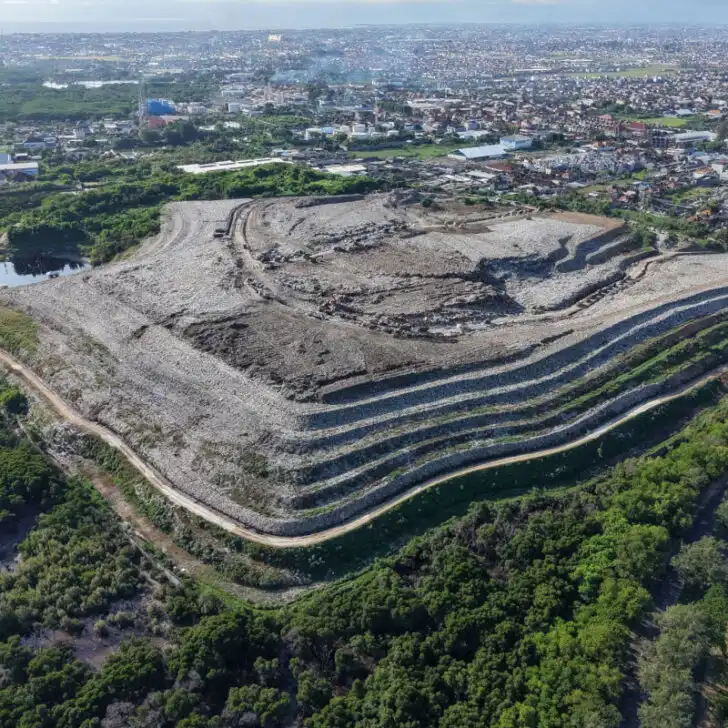
One of the biggest controversies in the sphere of waste management in Bali is Suwung TPA. It is the province’s biggest open landfill site. Currently standing at over storeys high and sprawling over 32 hectares, according to the last estimation, Suwung TPA receives more than 1,000 tonnes of trash every day.
The site technically stopped receiving organic waste as of August 2025; however, it is unclear how much mixed waste has still been permitted to be dumped at the site. The site was supposed to be closed once and for all ahead of Bali hosting the G20 Summit in November 2022.
Main Article: Bali Tourist Surveillance Technology
More recently, the site was issued with another round of final closure notices for the end of December 2025.
However, this received kickback and protests from local trash collectors who highlighted to the local government that an insufficient alternative was available.
This month, the Indonesian Environment Minister Hanif Faisol Nurofiq has stipulated that starting April 2026, organic waste will no longer be allowed to be disposed of at the Suwung Landfill in Bali to accelerate the transformation of waste management.
He told reporters, “We’re asking for the pressure on the Suwung landfill to be reduced. Only inorganic waste that doesn’t have the potential to cause additional pollution is allowed there. So, in April, only inorganic waste will be allowed into Suwung. Organic waste must be disposed of upstream.”
He confirmed that monitoring will be implemented to ensure that organic waste does not get dumped at the site. Minister Nurofiq added, “We must take firm action against self-management, against people who don’t sort their waste, their waste doesn’t need to be transported, it shouldn’t be allowed to enter the Suwung Landfill, so we all must make every effort to sort our waste starting from the upstream.”
Minister Nurofiq explained, “We have asked the mayor and the regent to complete organic waste sorting within a month at the latest. Everyone must act quickly; no one can slack off.”
He was clear that the Suwung TPA is now under an investigation for environmental pollution, and that the central government is no longer providing coercive administrative sanctions, but a criminal approach if the incoming waste is not reduced. Minister Nurofiq confirmed:
“There really is no longer any organic waste allowed to come in. No matter who it is, waste must be sorted starting now. Without sorting, organic waste will no longer be allowed to enter the Suwung Landfill by the end of March.”
As much as 60% of the waste produced in Bali is organic waste, and if disposed of and processed correctly, it can be turned into compost that can be used on the land. However, when mixed with inorganic material, the decomposition process is slowed down, and more pollution is created.
What does this mean for tourists and international residents in Bali? The knock-on impact could be more of a focus at a home, village, and community level to separate out waste and to take more responsibility over organic waste production.
The process could even be incentivised by the Badung Regency Government, which oversees top destinations like Canggu, Seminyak, and Uluwatu.
Main Article: Bali Tourist Surveillance Technology
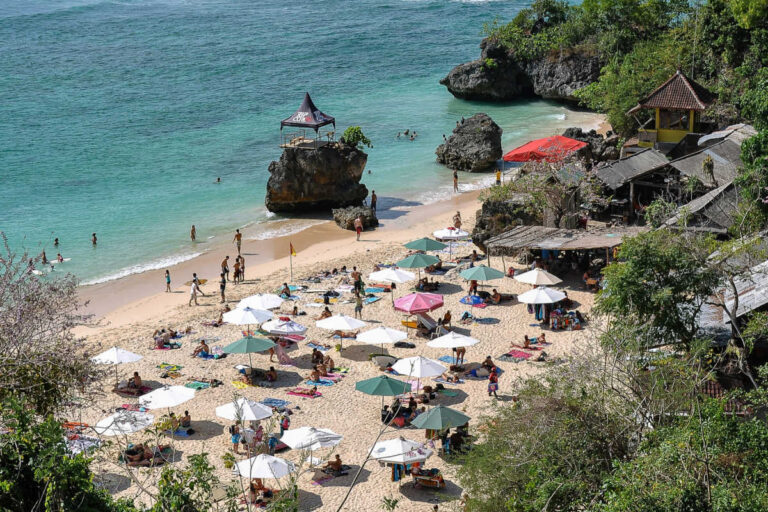
The Regent of Badung, Adi Wayan Arnawa, told reporters, “We urge the public to separate their waste. I’m open to offering rewards or prizes for those who manage their waste properly.”
Badung Regency has already stepped up its waste management processing system, which will have a positive impact on tourism resorts in the area.
This week, the Badung Regency Government has launched the Source-Based Waste Management Acceleration Action (ASPER PSBS). Regent Arnawa explained, “This Source-Based Waste Management Acceleration Action is the first step in establishing a patterned and integrated waste management system.”
He was joined at the launch by Acting Head of the Badung Environment and Sanitation Agency (DLHK), Made Rai Warastuthi, who shared, “This program is a management system that starts at the waste generation point, through sorting, processing, and reducing waste before it is transported to a further processing facility.”
Concluding “The targets of this activity include all villages and sub-districts in Badung Regency, households, business units, community groups, educational institutions, public and social facilities, traditional markets, and various other sources of waste generation.”
Main Article: Bali Tourist Surveillance Technology
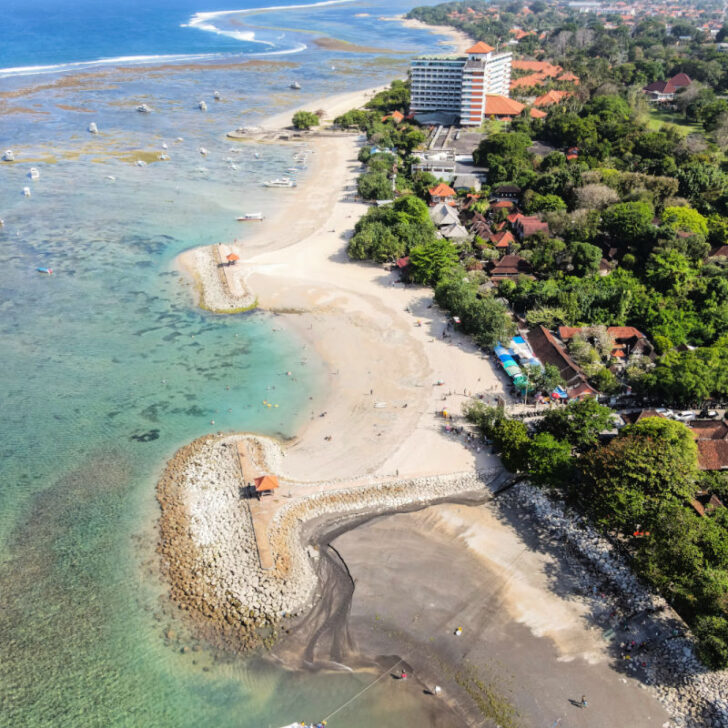
All above articles are provided by “The Bali Sun“