Rental Compliance for Foreigners
Rental Compliance for Foreigners – What You Need Before March 31, 2026
Last updated: February 2026 · By Bali Property Rules Research Desk
Key Takeaways
- Airbnb is not banned in Bali — but unlicensed properties listed on any platform face removal, fines, and enforcement action after March 31, 2026.
- Foreign villa owners need an NIB, Pondok Wisata license (up to 5 rooms), correct zoning, PBG/SLF building certificates, and tax registrations — individual foreigners cannot hold these licenses personally.
- PT PMA is the cleanest legal path — it can hold a Pondok Wisata license directly, apply through OSS, and comply with all tax obligations under one corporate structure.
- Penalties include listing removal from platforms, fines, property demolition (as seen at Bingin Beach in July 2025), and deportation for foreigners operating without proper business authorization.
Rental Compliance for Foreigners – Table of Contents
- Is Airbnb Actually Banned in Bali?
- What Licenses Do Foreign Villa Owners Need to Rent Legally?
- What Is a Pondok Wisata License and Who Can Hold One?
- How Does NIB and OSS Registration Work for Rental Properties?
- Does Your Villa’s Zoning Allow Short-Term Rentals?
- What Building Permits Does Your Property Need?
- How Does Compliance Differ by Ownership Structure?
- What Are the Tax Obligations for Foreign Rental Income in Bali?
- What Are the Penalties for Operating Without a License?
- Frequently Asked Questions
- Sources and References

Rental Compliance for Foreigners – Is Airbnb Actually Banned in Bali?
Airbnb is not banned in Bali. The Indonesian Ministry of Tourism has confirmed that online travel platforms including Airbnb and Booking.com remain legal. What the government requires is that all short-term rental accommodations listed on these platforms hold valid business licenses. Properties without proper permits are effectively banned from operating — the platforms themselves are not.
The confusion stems largely from Governor Wayan Koster’s public crackdowns on unlicensed accommodation and sensationalized media headlines that used phrases like “Airbnb ban” without nuance. In reality, the Indonesian government has not prohibited any online travel platform from operating. What the government has done is announce a compliance deadline: all accommodation properties listed on any platform must hold valid business licenses by March 31, 2026.
After that deadline, platforms will be required to verify the license status of listed properties and remove those that cannot demonstrate valid permits. This means that if your villa does not hold the correct licenses — including a Pondok Wisata permit or equivalent — it will be delisted. The property becomes invisible to the booking platforms that generate the vast majority of short-term rental bookings in Bali.
This enforcement push is part of Indonesia’s broader effort to formalize the tourism accommodation sector under the risk-based licensing framework established by PP 28/2025 and UU 6/2023 (Omnibus Law / Cipta Kerja). The goal is not to eliminate short-term rentals but to bring them into a regulated framework where taxes are collected, safety standards are met, and guest reporting obligations are fulfilled. For foreign villa owners, the practical implication is straightforward: you need to get licensed or stop renting.
The regulatory direction became even clearer in October 2025, when Indonesia enacted UU 18/2025 — the Third Amendment to the Tourism Law. This amendment mandates ecosystem-based tourism development and establishes a national integrated tourism data system, giving the government greater visibility into accommodation operators across the country. Notably, foreign tourist levies — previously based only on Bali’s provincial regulation — now have a national legal basis. Tourism businesses also face expanded obligations including community empowerment requirements. For short-term rental operators, the signal is unmistakable: the regulatory framework is tightening, and operating outside formal licensing will become increasingly difficult.
The distinction matters because it shapes your response. If Airbnb were banned outright, there would be nothing to do. But since the platforms remain legal and the issue is licensing, there is a clear compliance pathway — one that requires planning, time, and the right legal structure.
Rental Compliance for Foreigners – What Licenses Do Foreign Villa Owners Need to Rent Legally?
Foreign villa owners need at minimum five regulatory requirements to operate legally: a Nomor Induk Berusaha (NIB) obtained through OSS, a Pondok Wisata or TDUP accommodation license, a PBG building permit, an SLF building safety certificate, and complete tax registrations including hotel tax (PHR), income tax (PPh), and land/building tax (PBB).
The full licensing stack for a short-term rental property in Bali involves multiple government agencies and systems.
Here is a complete overview:
Requirement | What It Is | Who Issues It |
NIB (Nomor Induk Berusaha) | Master business identification number | OSS system (online) |
Pondok Wisata License | Tourism accommodation permit (up to 5 rooms) | Local tourism office via OSS |
TDUP (Tanda Daftar Usaha Pariwisata) | Tourism business registration certificate | Local tourism office via OSS |
PBG (Persetujuan Bangunan Gedung) | Building approval (replaced IMB) | Local government |
SLF (Sertifikat Laik Fungsi) | Building safety/fitness certificate | Local government |
NPWP | Tax identification number | Tax office |
PHR Registration | Hotel/restaurant tax registration | Local revenue office |
Guest Reporting (STM) | Foreign guest reporting within 24 hours | Local police |
For properties with more than five guest rooms, the Pondok Wisata license is not sufficient. You will need a Hotel Melati (budget hotel) license instead, which carries additional requirements including higher staffing standards, more detailed safety inspections, and potentially different zoning classifications. Most foreign-owned villas in Bali fall within the five-room threshold, making Pondok Wisata the relevant license category for the majority of operators.
Each of these requirements serves a different regulatory purpose. The NIB and TDUP cover your business registration. The Pondok Wisata license authorizes the specific accommodation activity. The PBG and SLF confirm your building is approved and safe for commercial tourism use. The tax registrations ensure revenue collection. And guest reporting fulfills Indonesia’s immigration monitoring requirements.
Critical for foreign owners: Individual foreigners cannot hold a Pondok Wisata license or NIB personally. You must operate through a PT PMA company or, in leasehold situations, have your Indonesian landlord hold the license. See our PT PMA guide for setup details.

Rental Compliance for Foreigners – What Is a Pondok Wisata License and Who Can Hold One?
A Pondok Wisata is a tourism accommodation license for small properties with up to five guest rooms, established under the framework of UU 10/2009 (Tourism Law). Only Indonesian citizens or Indonesian-registered companies — including PT PMA companies — can hold a Pondok Wisata license. Individual foreigners cannot hold one personally, regardless of their visa status or property rights.
The term “Pondok Wisata” translates literally as “tourist lodge” or “tourist cottage.” It is the entry-level accommodation license in Indonesia’s tourism licensing hierarchy, designed for small-scale operations — typically private villas, guesthouses, and homestays with a maximum of five rentable rooms. This is distinct from larger operations, which require different license categories.
Indonesia’s tourism accommodation licensing follows a clear hierarchy:
- Pondok Wisata (1–5 rooms):Small-scale tourism accommodation. Simplest licensing requirements. Most common for foreign-owned villas.
- Hotel Melati (budget hotel, more rooms):For properties exceeding five rooms. Requires additional staffing, safety, and operational standards. Different KBLI classification.
- Classified Hotel (star-rated):Full hotel classification with star ratings. Requires compliance with detailed service, facility, and staffing standards set by the Ministry of Tourism.
The critical legal point for foreign owners is who can hold a Pondok Wisata license. Under Indonesian law, the license can only be issued to:
- Indonesian citizens (WNI):An Indonesian individual can hold the license in their own name.
- Indonesian legal entities (including PT PMA):A company registered in Indonesia — even one with foreign shareholders — can hold the license through its corporate identity.
This creates three distinct scenarios for foreign owners:
A foreigner with a leasehold villa cannot hold the Pondok Wisata license themselves. Their Indonesian landlord or the landlord’s company must hold it. This means you are dependent on your landlord for legal operation, which has significant implications for control and liability.
A foreigner with a Hak Pakai title cannot hold the license personally either. Despite holding a registered property right, Hak Pakai is a residential use right that does not confer business licensing eligibility on an individual foreigner. A separate PT PMA is required to hold the accommodation license.
A PT PMA company can hold the Pondok Wisata license directly. The company applies through OSS, holds the license in its own name, and operates as the legal entity responsible for all compliance obligations. This is why PT PMA is consistently recommended as the cleanest path for foreign-owned short-term rental operations in Bali.
Nominee licensing carries the same risks as nominee property ownership. Having an Indonesian individual hold a Pondok Wisata license “on your behalf” while you operate the business creates the same legal exposure as nominee property arrangements. The license holder is the legal operator — not you. See our guide on nominee ownership risks for why this structure fails.
Rental Compliance for Foreigners – How Does NIB and OSS Registration Work for Rental Properties?
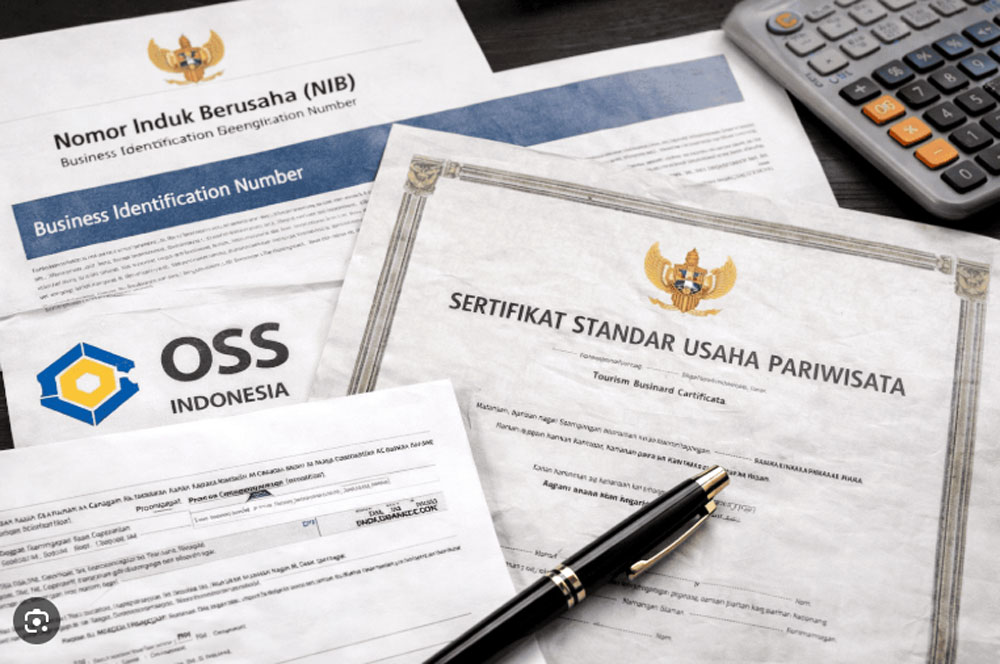
The Nomor Induk Berusaha (NIB) is your master business registration number, obtained through the OSS (Online Single Submission) system at oss.go.id. Under the risk-based licensing framework established by PP 28/2025, tourism accommodation is classified as a medium-risk activity. This means NIB registration alone is not sufficient — you need additional permits and certificates before you can legally operate.
The OSS system is Indonesia’s centralized business licensing portal, designed to streamline what was previously a fragmented process involving multiple government agencies. For tourism accommodation, the OSS process follows a structured sequence:
- Register on the OSS system:Your PT PMA creates an account on the OSS platform. This requires the company’s NPWP (tax ID), deed of establishment, and other corporate documents.
- Obtain NIB:The NIB is generated automatically upon successful registration. It serves as your master business identification number and is required for all subsequent license applications.
- Apply for sector-specific permits:Through OSS, you apply for the Pondok Wisata license and TDUP (tourism business registration). The system routes your application to the relevant local tourism office.
- Submit supporting documents:You must upload evidence of PBG, SLF, zoning compliance, and other prerequisites. The system will not issue final approval without these documents.
- Receive verified license status:Once all documents are verified and approved, your license status is updated in the OSS system. This is the status that platforms will check after the March 31, 2026 deadline.
The risk-based classification under PP 28/2025 determines how much scrutiny your application receives. Tourism accommodation falls into the medium-risk category, which means you need more than just an NIB — you need verified compliance with building safety, zoning, and operational standards before your license is activated.
The NIB is tied to your business entity (PT PMA), not to you personally as a foreign individual. This is another reason why individual foreigners need a corporate structure to operate legally. Without a PT PMA, you cannot register on OSS, obtain an NIB, or apply for a Pondok Wisata license.
Your PT PMA must be registered under the correct KBLI codes for accommodation and villa management services. Verify the current applicable KBLI codes with your legal consultant, as these are periodically updated. Using incorrect KBLI codes can result in your license application being rejected or, worse, approved for the wrong activity — which does not provide legal coverage for short-term rental operations.
Rental Compliance for Foreigners – Does Your Villa’s Zoning Allow Short-Term Rentals?
Your property must be located in a tourism zone (typically marked pink on local spatial plans) or a commercial zone (red/orange) to operate as a short-term rental. Properties in residential zones (yellow) or agricultural zones (green) cannot legally operate as tourism accommodation, regardless of what other licenses you hold. Zoning compliance is a prerequisite — not optional.
Indonesia’s spatial planning framework divides land into designated zones, each with permitted uses. For short-term rental operations, the zoning of your property’s location determines whether you can even begin the licensing process. The key zone classifications are:
- Tourism zone (pink on spatial plans):Explicitly permitted for accommodation and tourism-related commercial activity. If your property is in a designated tourism zone, zoning is not an obstacle.
- Commercial zone (red/orange):Generally permitted for business activities including accommodation, though some commercial zones may require additional approvals depending on the specific local regulations (Perda) in your kabupaten/kota.
- Residential zone (yellow):Not permitted for commercial tourism use. Properties in residential zones cannot legally operate as short-term rental accommodation, even if they hold all other required licenses.
- Agricultural zone (green):Not permitted for tourism accommodation or any commercial activity. Agricultural zoning is the most restrictive classification for property development.
- Mixed-use zones:Some areas carry mixed-use designations that may permit both residential and limited commercial activity. Check specific local regulations to confirm whether tourism accommodation is included in the permitted uses.
How to verify your property’s zoning status:
- Check the local RTRW (Rencana Tata Ruang Wilayah):This is the regional spatial plan that maps all zoning designations. Your local planning office (Dinas Tata Ruang) maintains these documents.
- Request a Keterangan Rencana Kota (KRK):This is a formal zoning information letter from the local planning office that confirms the permitted uses for your specific property location. This document is typically required as part of your PBG application.
- Engage your notaris or legal consultant:Zoning verification should be part of your due diligence process — ideally before you purchase or lease a property with the intention of operating a rental.
Many villas in popular areas like Canggu, Seminyak, and Ubud sit on land originally zoned residential or agricultural. This is one of the most common compliance obstacles for existing villa owners. Retroactive rezoning is theoretically possible in some cases — local governments do periodically update their spatial plans — but it is neither guaranteed nor quick. The process involves public consultation, environmental review, and approval from multiple government levels. Do not assume your property will be rezoned to accommodate your business plans.
If your property is in a non-compliant zone, your options are limited. You can wait for a potential rezoning in a future spatial plan update, you can relocate your operation to a compliant property, or you can accept that legal short-term rental operation is not possible at that location. There is no legal workaround that allows tourism accommodation in a zone where it is explicitly prohibited.
Rental Compliance for Foreigners – What Building Permits Does Your Property Need?
Every short-term rental property needs two building-related certificates: a PBG (Persetujuan Bangunan Gedung), which replaced the old IMB system under PP 16/2021, and an SLF (Sertifikat Laik Fungsi), which certifies the building is structurally safe and suitable for its intended commercial or tourism use. Properties with only a residential IMB need to convert.
The building permit system in Indonesia underwent a significant overhaul with PP 16/2021, which replaced the long-standing IMB (Izin Mendirikan Bangunan) system with the PBG/SLF framework. For short-term rental operators, this change has practical consequences.
PBG (Persetujuan Bangunan Gedung):
- The PBG is your building approval document — it confirms that the building’s design, construction, and intended use comply with local regulations.
- Critically, the PBG must classify the building for its actual intended use. A PBG issued for residential use does not cover commercial tourism accommodation. If your property was built as a residence and you want to operate it as a rental, you need a PBG that reflects commercial or tourism use.
- If you hold an old IMB for residential use, that IMB remains valid for residential purposes but does not authorize commercial activity. You will need to obtain a new PBG with the correct commercial/tourism classification.
- PBG applications are submitted to the local government (not through OSS). The process involves submission of architectural plans, structural calculations, and compliance with local building codes.
SLF (Sertifikat Laik Fungsi):
- The SLF certifies that the completed building meets safety and structural standards for its intended function. While the PBG approves the plan, the SLF confirms the built result.
- An SLF is issued after a physical building inspection confirms compliance with fire safety, structural integrity, accessibility, and sanitation standards appropriate for the building’s classified use.
- For Pondok Wisata operations, the SLF must confirm the building is suitable for tourism accommodation use — not just residential occupation.
- The SLF must be renewed periodically. The renewal interval depends on the building’s classification and local regulations. Do not assume a one-time SLF issuance covers you indefinitely.
- Your Pondok Wisata license cannot be fully activated in the OSS system without a valid SLF. This makes it a hard prerequisite, not a “nice to have.”
For many existing villa owners in Bali, the PBG/SLF requirement represents one of the most time-consuming steps in the compliance process. Properties built years ago under the old IMB system — or worse, built without any permit at all — face a longer path to compliance. Practitioners report that obtaining a PBG and SLF for an existing building typically takes several months, depending on the complexity of the structure and the responsiveness of the local government office.
Rental Compliance for Foreigners – How Does Compliance Differ by Ownership Structure?
Your compliance pathway depends entirely on how you hold the property. A PT PMA can hold all licenses directly and represents the most straightforward path to legal short-term rental operation. Leasehold operators depend on their Indonesian landlord for key permits. Hak Pakai holders face the most complex situation — their residential use right cannot support commercial activity without a separate business entity.
The following table summarizes how each ownership structure affects every major compliance requirement:
Requirement | PT PMA | Leasehold (Hak Sewa) | Hak Pakai |
Who holds NIB? | PT PMA directly | Landlord or landlord’s company | Separate PT PMA required |
Who holds Pondok Wisata? | PT PMA directly | Landlord or landlord’s company | Separate PT PMA required |
Zoning verification | PT PMA’s responsibility | Shared — verify before signing lease | Verify before purchase |
PBG/SLF | PT PMA applies | Usually landlord’s responsibility (verify in lease) | PT PMA or Hak Pakai holder (but operating entity is PT PMA) |
Tax registration | PT PMA’s NPWP | Landlord’s NPWP for license; PT PMA for operational taxes | PT PMA’s NPWP |
Guest reporting | PT PMA as operator | Operator (must be specified in lease) | PT PMA as operator |
PT PMA (cleanest path):
A PT PMA provides the most direct compliance route because the company can hold every required license and registration in its own name. The PT PMA applies for the NIB through OSS using its own NPWP, holds the Pondok Wisata license directly, and serves as the legal operator for all regulatory purposes. All tax obligations — hotel tax, income tax, land and building tax — flow through the corporate structure.
The PT PMA must have the correct KBLI codes registered for accommodation and villa management (verify current codes with your consultant). Minimum capital requirements apply — see our guide on PT PMA setup for current thresholds and the step-by-step formation process. The PT PMA can own the property directly (Hak Pakai atas Hak Milik or Hak Guna Bangunan) or lease it, giving flexibility in property acquisition structure.
Leasehold (Hak Sewa):
Leasehold operators face a structural dependency: the Pondok Wisata license must be in the landlord’s name or the landlord’s company name. This means the legal operator of your rental business is technically your landlord — not you. This has significant implications for control, liability, and business continuity.
Your lease contract must explicitly allow commercial rental use. If the lease says “residential use only,” you cannot legally operate a short-term rental from that property, regardless of what other arrangements you make. The lease should also clearly specify who is responsible for licensing, tax compliance, guest reporting, and maintenance of PBG/SLF certificates. See our leasehold guide for essential contract clauses.
To gain more control, some leasehold operators establish a PT PMA that enters into a management agreement with the landlord. The landlord holds the license, but the PT PMA manages the operation. This adds cost and complexity but provides a clearer separation of roles.
Hak Pakai:
Hak Pakai is a residential use right — it does not authorize commercial activity. If you hold Hak Pakai personally and want to rent the property commercially, you need a separate PT PMA to operate the rental business. The PT PMA holds the accommodation license and operates as the legal business entity; the Hak Pakai simply covers your right to use the building.
This creates the most complex compliance structure of the three options. You have an individual property right (Hak Pakai) combined with a corporate operating entity (PT PMA), each with its own regulatory obligations. The relationship between the two must be clearly documented — typically through a usage agreement or lease between you (as Hak Pakai holder) and the PT PMA (as operator). Consult a lawyer specializing in foreign property structures to ensure this is set up correctly.
Rental Compliance for Foreigners – What Are the Tax Obligations for Foreign Rental Income in Bali?
Foreign villa owners face four primary tax obligations on rental income in Bali: a hotel tax (Pajak Hotel or PHR) of up to 10% collected from guests and remitted to local government under UU 1/2022, a 10% final income tax (PPh) on gross rental revenue under PP 34/2017, annual PBB land and building tax, and the Bali Tourism Levy of IDR 150,000 per foreign guest.
Each tax obligation operates independently, with different collection mechanisms, payment schedules, and responsible agencies. Here is a detailed breakdown:
- PHR (Pajak Hotel / Hotel Tax) — up to 10% of room rate
Under UU 1/2022 (Regional Tax Framework), all paid accommodation — including Pondok Wisata operations — is subject to hotel tax. The rate is set by each kabupaten/kota at up to 10% of the room charge. This tax is collected from the guest (added to the room rate) and remitted to the local revenue office (Bapenda) on a monthly basis. The fact that your property is a private villa and not a “hotel” in the common sense does not exempt you. If guests pay to stay there, hotel tax applies.
- PPh (Income Tax — Rental) — 10% final tax on gross revenue
Property rental income is subject to a 10% final income tax under PP 34/2017 / PMK 261/2016. “Final” means this tax fully satisfies your income tax obligation on this specific revenue stream — you do not need to include it again in your annual income tax return. The tax is calculated on gross rental revenue (not net profit), which means operating expenses do not reduce the taxable amount. This tax is paid to the national tax office (DJP) through your PT PMA’s NPWP.
- PBB (Pajak Bumi dan Bangunan) — annual land and building tax
PBB is an annual property tax based on the government-assessed value (NJOP) of the land and building. The rate varies by location and property value but applies regardless of whether you rent the property or not. PBB is paid annually to the local tax office. For more details on how PBB is calculated, see our complete cost breakdown for foreign property owners.
- Bali Tourism Levy — IDR 150,000 per foreign guest
Bali charges a provincial tourism levy of IDR 150,000 per foreign tourist. This levy is collected at the point of entry or through accommodation operators. As a short-term rental operator, you should be aware of this obligation and confirm with local authorities how collection applies to your specific operation.
- VAT considerations
If your PT PMA’s gross revenue exceeds the VAT threshold (currently IDR 4.8 billion per year), you may need to register as a PKP (Pengusaha Kena Pajak / taxable enterprise) and charge VAT on your services. Most small villa operations fall well below this threshold. UU 7/2021 (Tax Harmonization Law) governs the current VAT framework — consult your tax advisor if your revenue approaches this level.
Guest reporting is mandatory. All accommodation operators must report foreign guests to the local police within 24 hours of check-in via the Surat Tanda Melapor (STM) process. Failure to report can result in fines and complications with your accommodation license renewal.
Rental Compliance for Foreigners – What Are the Penalties for Operating Without a License?
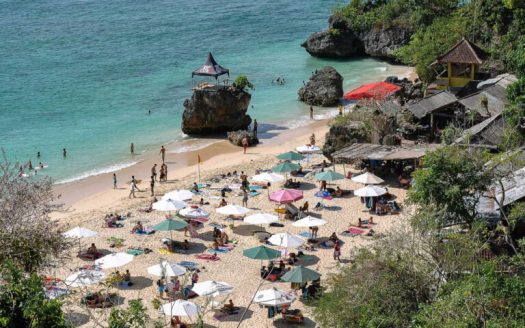
Important:In July 2025, Governor Wayan Koster oversaw the demolition of 48 illegal structures at Bingin Beach, Uluwatu. Bali’s enforcement is no longer theoretical — unlicensed properties face real consequences including demolition, delisting, and deportation.
Penalties for operating an unlicensed short-term rental in Bali range from administrative sanctions to criminal prosecution. After the March 31, 2026 compliance deadline, platforms will be required to remove unlicensed listings. The Bali provincial government has demonstrated willingness to enforce aggressively — in July 2025, Governor Wayan Koster oversaw the demolition of 48 illegal structures at Bingin Beach, Uluwatu.
Rental Compliance for Foreigners – Administrative penalties:
- Listing removal from platforms:After March 31, 2026, Airbnb, Booking.com, and other platforms will be required to verify license status and delist properties that cannot demonstrate valid permits. This effectively eliminates your primary booking channel.
- Revocation of business permits:If you hold some permits but not all required ones, the government can revoke your existing permits and require you to cease operations entirely until full compliance is achieved.
- Closure orders:Local government officials can issue formal closure orders requiring you to stop accepting guests immediately. These orders can be enforced by local police.
- Fines:Administrative fines vary by kabupaten/kota. The amounts are set by local regulation and can be applied for each violation category separately — meaning you could face multiple fines for multiple compliance failures simultaneously.
For foreigners specifically:
- Immigration enforcement:Operating a business without proper authorization — specifically, running a rental operation without a PT PMA or proper work permit — can trigger immigration enforcement action. Indonesian immigration law treats unauthorized business activity as a visa violation.
- Deportation:Foreigners caught operating unlicensed businesses face deportation from Indonesia. This is not a theoretical risk — immigration authorities actively investigate foreigners reported for unauthorized commercial activity.
- KITAS/KITAP consequences:KITAS or KITAP holders operating unlicensed businesses face permit revocation and a potential ban on re-entry. This can effectively end your ability to live in Indonesia.
- Criminal prosecution:In serious cases, unauthorized business operation by foreigners can result in criminal charges under Indonesian immigration and business licensing laws.
Rental Compliance for Foreigners – Physical enforcement:
The demolition of 48 illegal structures at Bingin Beach, Uluwatu in July 2025 was a turning point in enforcement perception. Governor Koster personally oversaw the operation, which was widely covered in both local and international media. The demolished structures were built without proper permits (no PBG/SLF) on land without compliant zoning. This precedent demonstrates that the Bali government is willing to use physical enforcement — not just administrative paperwork — against non-compliant properties.
Properties most vulnerable to physical enforcement are those built without any building permit on land with agricultural or residential zoning. If your property lacks both a PBG and compliant zoning, the risk of demolition enforcement is not negligible.
Tax penalties:
Failure to collect and remit PHR (hotel tax) carries separate penalties under regional tax regulations, including back taxes, interest, and administrative fines. Unreported rental income triggers standard tax non-compliance penalties under Indonesian tax law, which can include significant financial penalties and potential criminal charges for tax evasion in serious cases.
The March 31, 2026 deadline creates real urgency. Licensing processes — especially PT PMA formation, OSS registration, and PBG/SLF applications — take time. Practitioners report the full compliance process typically takes 3 to 6 months from start to finish, and that assumes no complications with zoning, building permits, or corporate formation. Starting now is not early — it may already be tight for complex cases.
Rental Compliance for Foreigners – Frequently Asked Questions
Do I need a PT PMA to rent my villa in Bali on Airbnb?
Not necessarily, but it is the most straightforward legal path. If you hold a leasehold, your Indonesian landlord can hold the Pondok Wisata license. However, if you hold Hak Pakai or want direct control over licensing and operations, a PT PMA is required. Individual foreigners cannot hold accommodation licenses personally in Indonesia.
Can I get deported for running an illegal Airbnb in Bali?
Yes. Operating a business without proper authorization — including running an unlicensed short-term rental — can be treated as a violation of your visa conditions under Indonesian immigration law. Foreigners caught operating without a PT PMA or proper business permits face deportation, entry bans, and potential criminal prosecution.
What is the difference between Pondok Wisata and TDUP?
Pondok Wisata is the specific license type for small tourism accommodations with up to five guest rooms. TDUP (Tanda Daftar Usaha Pariwisata) is the broader tourism business registration certificate. You need both — the TDUP registers your tourism business, while the Pondok Wisata license authorizes you to operate a specific type of accommodation. Both are obtained through the OSS system.
How much does it cost to get a Pondok Wisata license in Bali?
Costs vary depending on your situation. The license application itself involves government fees that are relatively modest. However, the total compliance cost — including PT PMA formation, PBG/SLF certificates, legal consultant fees, and OSS registration — typically ranges from IDR 50 to 150 million (practitioners report), depending on whether you need a new PT PMA or already have a compliant business structure.
Do I need to report foreign guests staying at my villa to the police?
Yes. All accommodation operators in Indonesia must report foreign guests to the local police within 24 hours of check-in through the Surat Tanda Melapor (STM) process. This applies to all short-term rental operators regardless of size. Failure to comply can result in fines and complications with license renewals.
Rental Compliance for Foreigners – Sources and References
- PP 28/2025 (Risk-Based Business Licensing)— Framework for OSS registration and business license classification for tourism accommodation
- UU 10/2009 (Tourism Law)— Legal basis for Pondok Wisata and tourism accommodation licensing categories
- PP 16/2021 (Building Regulation)— Replaced IMB with PBG/SLF building permit system
- UU 1/2022 (Regional Tax Framework)— Legal basis for hotel tax (PHR) on tourism accommodation including Pondok Wisata
- PP 34/2017 / PMK 261/2016 (Rental Income Tax) — 10% final income tax on property rental revenue
- UU 6/2023 (Omnibus Law / Cipta Kerja) — Basis for OSS risk-based licensing system
- PP 44/1994 (Hak Sewa Regulation)— Framework for leasehold agreements and tenant rights
- UU 40/2007 (Company Law)— Legal framework for PT PMA establishment and corporate governance
- UU 25/2007 (Investment Law)— Foreign investment framework and PT PMA requirements
- Permen Investasi/BKPM 5/2025— Current PT PMA minimum capital requirements
- Perpres 10/2021 (Positive Investment List)— Sector classifications for foreign investment in tourism accommodation
- UU 18/2025 (Third Amendment to Tourism Law)— National framework for tourism data integration, foreign tourist levies, and expanded operator obligations
Disclaimer: This guide is for informational purposes only and does not constitute legal advice. Always consult a qualified Indonesian lawyer.