North Bali Airport Investment
North Bali Airport Investment – The North Bali International Airport is one of the hotly anticipated development projects the province has ever seen.
Here at PT. Property Indah Bali we’ve watched the project come on and off the table more times than we care to count, but with Indonesian President Prabowo Subianto vowing to complete it during his time in office, it appears progress is being made.
The company behind the North Bali Airport project, PT BIBU Panji Sakti, has confirmed that it has partnered with South Korean-based transportation and infrastructure company S-Transport Co. Ltd to develop the digital ecosystem for the airport and surrounding infrastructure developments.
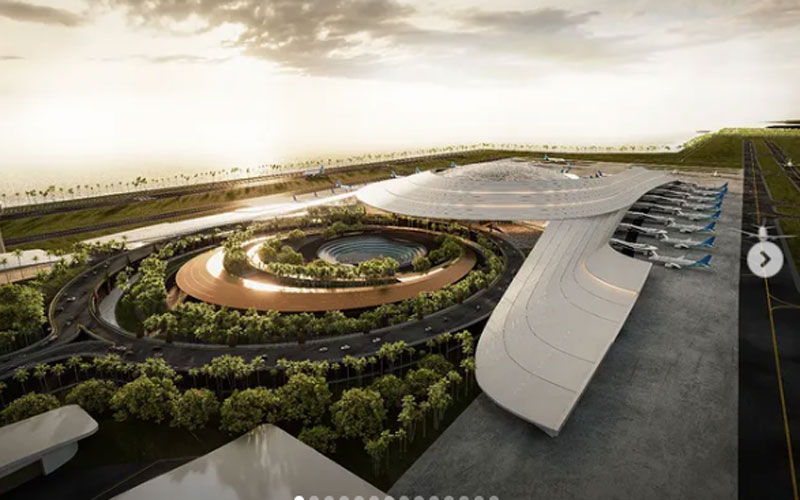
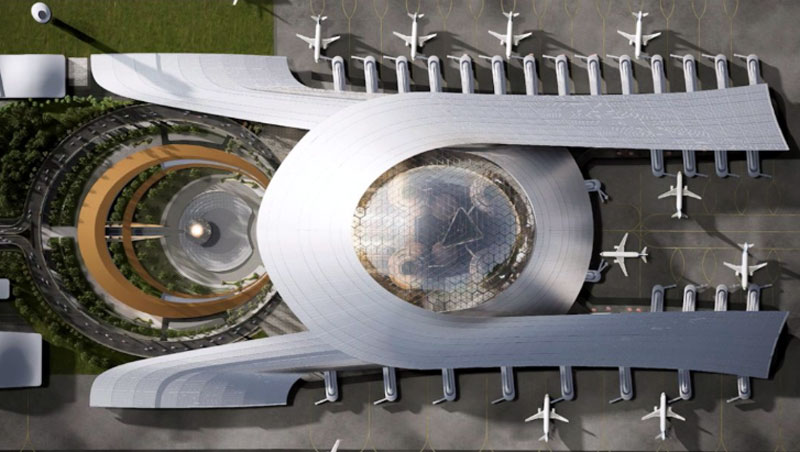
S-Transport Co. Ltd will work alongside other strategic development partners in the project, such as Alien Design Consultant, which is responsible for the airport’s architectural concept, to be known as an ARTPORT rather than simply an airport.
The CEO of PT BIBU Panji Sakti, Erwanto Sad Adiatmoko Hariwibowo, told reporters, “This airport isn’t just about building aviation infrastructure. It’s about opening access, changing economic flows, and providing fairer opportunities for North Bali.”
He confirmed that, as part of the MoU with S-Transport, the company will provide airport transportation systems planning and digital integration, and develop efficient, safe operational modes for the entire facility.
The CEO of S-Transport, Choi Jamie Jangkook, told reporters how the company sees North Bali as a strategic destination, not only for tourism but for regional connectivity. He noted, “We see this project as an opportunity to design an airport that is conceived from the outset as an integrated system, not just a terminal and runway.”
He added, “We are bringing a data-driven and simulation-driven approach. We are looking at how the airport operates under various scenarios, how passenger flow is managed, and how safety systems are designed from the outside. All of this must be considered before the first concrete is poured.”
Although President Subianto promised to complete the North Bali International Airport by the end of his term, the project is still a long way from welcoming tourists.
Ambitious plans suggest services could be launched as early as 2028. In the meantime, the conversation continues around scaling capacity at I Gusti Ngurah Rai International Airport.
Speaking to reporters last week, the Director General of Air Transportation at the Ministry of Transportation, Lukman F. Laisa, revealed plans to increase Bali’s capacity to accommodate up to 55 million passengers.
He told reporters that projections and travel forecasts show that Bali must boost its capacity to receive 32 million passengers over the next couple of years, reach 42 million soon after, and eventually reach 55 million passengers annually at maximum capacity.
Tourists traveling to Bali Airport are always advised to leave extra travel time both upon landing and upon departure. Tourists are advised to make the most of the time-saving pre-arrival measures available to ensure a smooth arrival in Bali.
This includes applying for an eVisa on Arrival, which saves time upon landing in Bali and enables visa holders to use the automated gates, which reduce immigration processing time to just seconds.
Main Article: North Bali Airport Investment
Tourists can apply for an eVisa on Arrival via the official Indonesia Immigration website at least 48 hours prior to their flight to Bali. However, it is highly recommended to allow at least a full working week for the application to be processed, with a margin for unforeseeable delays.
Tourists departing from Bali Airport are advised to allow an extra hour for travel to the airport, based on GPS recommendations, especially during rush hour.
Not only are there considerable traffic congestion red zones around the airport, but during peak travel times, queues for bag drop-off and immigration can also build up, even in the low season,
Government Orders Bali To Clean Up Trash
Indonesia’s Vice President, Gibran Rakabuming, has issued Bali strict orders to tackle ongoing waste management issues.
Following a meeting between the Central Government and the Bali Provincial Government last week, waste management has come under scrutiny again.
Sustainability has been one of the biggest focal points Bali has working on for more than a decade. The traditional way of life had been inherently sustainable, regenerative even, for centuries, but in the last sixty years, with the advent of tourism and modernisation on the island, many traditional sustainable practices have been let go.
This, coupled with the more than 7 million tourists who visit the island each year, as well as a growing local population, has led to bottlenecks in infrastructural development, most noticeably in the areas of waste management and the island’s transportation network.
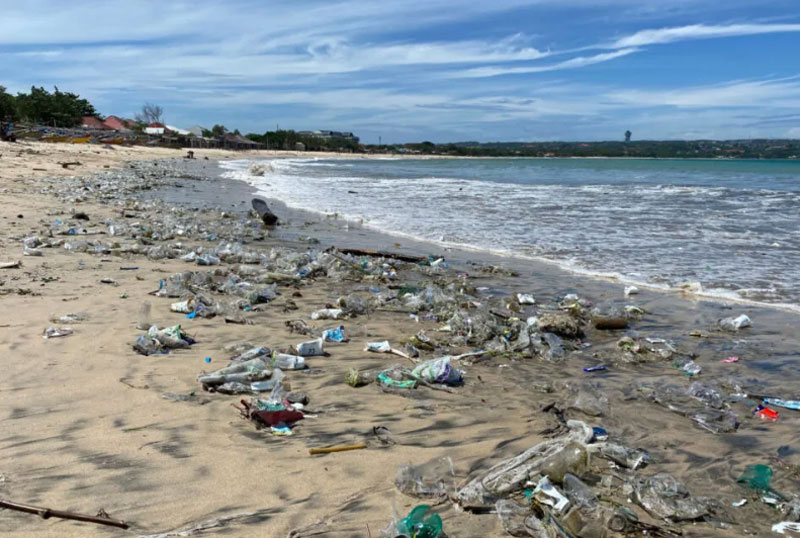
Since November, which marked the beginning of the rainy season, Bali’s southern beaches have been hit with a deluge of ocean debris.
This has ranged from organic material to plastic trash, and while Badung Regency Government and the Bali Provincial Government have put measures in place to tackle the issue, the situation persists, threatening the public image of Bali as a world-class tourism destination, the quality of life of local people, and the environment.
The worst-affected areas are the same every year, and with the situation worsening year on year, it is evident that drastic and long-lasting changes must be made. The Bali Provincial Government is now under pressure from the Central Government to tackle the issue once and for all.
During a meeting between Indonesia’s Vice President, Gibran Rakabuming, the Indonesian Tourism Minister Widiyanti Wardhana, the Governor of Bali, Wayan Koster, and other key stakeholders, the provincial leader was urged to do better, and that the Central Government is tackling waste management seriously as a national issue.
Vice President Rakabuming told Governor Koster, “I urge you, Mr. Governor, to ensure proper upstream and downstream management. Therefore, the habit of sorting waste at home needs to be encouraged.” The prevailing narrative is that Bali’s issues with waste management are driven by the tourism sector, but that isn’t strictly true.
While the tourism sector certainly contributes plenty of waste, household waste, and waste from other business sectors are also rarely sorted and processed in sustainable ways.
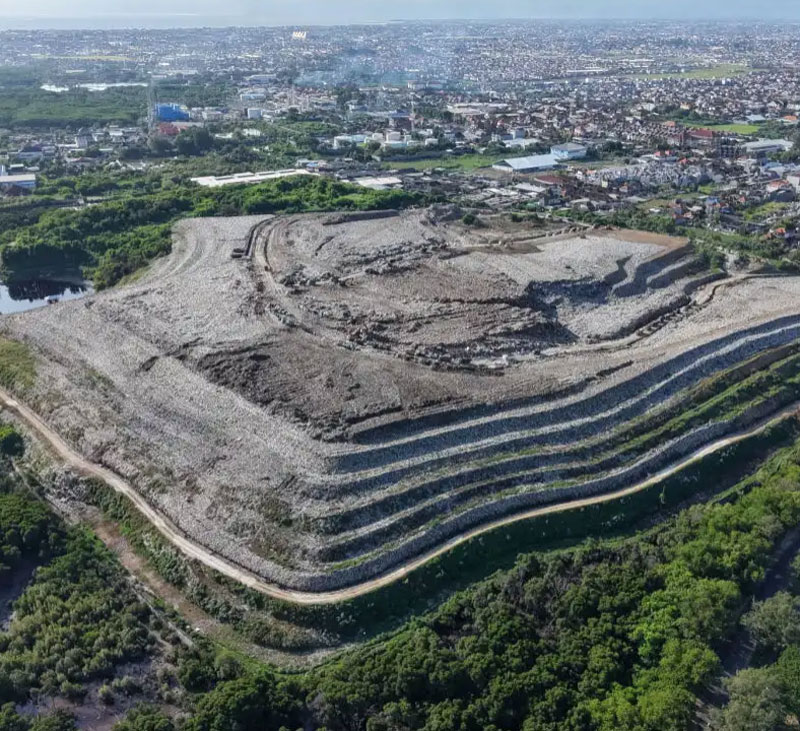
Least not at the scale the issue requires. There are recycling facilities throughout Bali, and NGOs like Sungai Watch have even created private facilities, but still, the island’s biggest open landfill, the Suwung TPA, cannot be closed.
Suwung TPA has been set to close for years now; the last closure notice was set for 23rd December 2025, though this was extended after protests from waste collectors who were fearful that there were insufficient alternatives for the volume of waste that would quickly accumulate.
Currently standing over 10 storeys high and sprawling over 32 hectares, Suwung TPA receives more than 1,000 tonnes of trash every day. The site technically stopped receiving organic waste as of August 2025; however, it is unclear how much mixed waste has still been permitted to be dumped at the site.
Governor Koster gave the site an operational extension until 28th February 2026, but with that date just days away, it’s unclear what the next steps will be.
Governor Koster explained in December that “The Mayor of Denpasar and Regent of Badung are committed to ensuring that the closure of the Suwung Landfill must be carried out no later than February 28th, 2025.
After that, they will not request a postponement or extension of the closure period. They will also ensure that no waste will be dumped at the Suwung Landfill by March 1st, 2026.”
During last week’s meeting, Governor Koster confirmed that the new Beach Waste Management Task Force would be deployed, alongside more than 300 staff from the Badung Environment and Sanitation Agency.
Main Article: North Bali Airport Investment
Vice President Rakabuming concluded, “It is very important to protect the Bali we love.” He suggested that Bali will remain under pressure from the central government to tackle the issue from both an environmental and tourism perspective.
“The first quarter of 2026 is crucial. Before there was the long Christmas and New Year holiday, now there is the Chinese New Year holiday, and then there is the Eid al-Fitr holiday. This is crucial. This momentum must be maintained, after that the school holidays will begin in June and July.”
Tourists traveling to Bali must be aware that for the remainder of the rainy season, until early April, there is a risk of tides of plastic trash washing up on Kedonganan Beach, Jimbaran Beach, Kuta Beach, Legian Beach, and Seminyak Beach.
While teams work around the clock to clear up the tides of trash, sometimes tourists do encounter the waste. Destinations around the other side of the coast, like Sanur and Nusa Dua, tend not to be affected.
Main Article: North Bali Airport Investment
Bali Metro System Progress
Questions Raised Over Slow Progress On Bali Metro System As Tourist Traffic Congestion Worsens
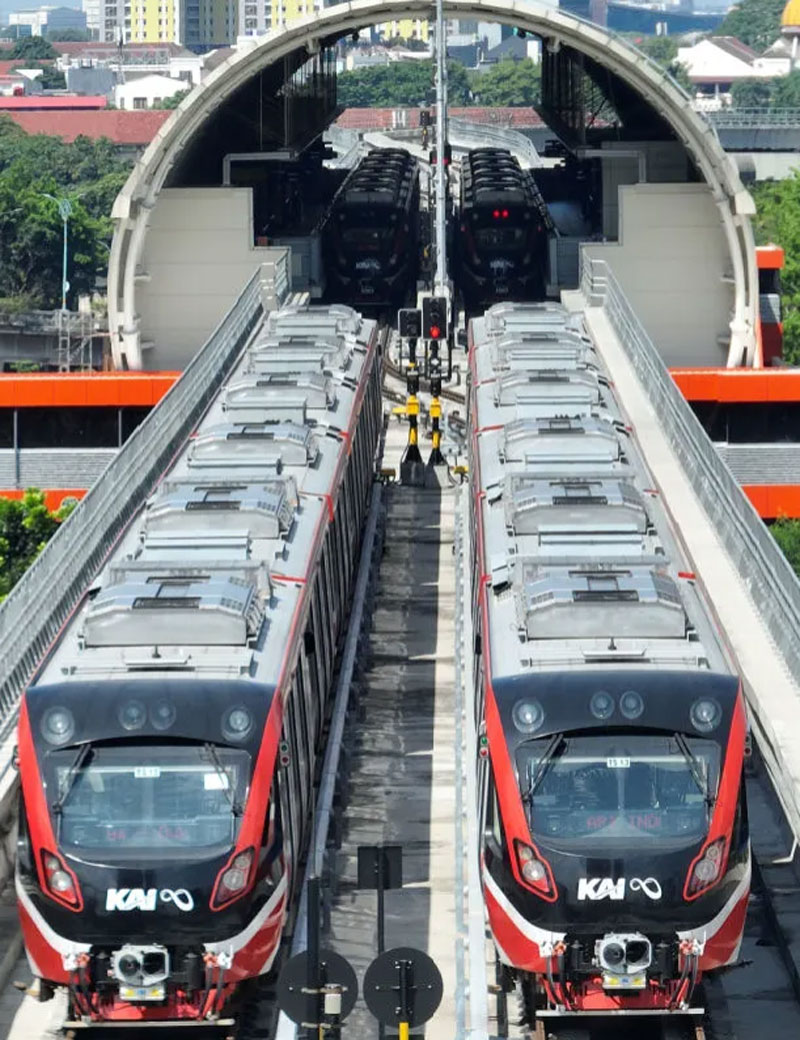
The project is poised to help mitigate the island’s mounting issues with traffic congestion and minimal public transportation options. Despite groundbreaking on the project over a year ago, progress on the development has become increasingly slow.
The Bali Urban Railway Network has been one of the most contentious development projects in Bali in recent years. This, alongside the North Bali International Airport, has the capacity to completely change the island’s face.
Bringing transportation benefits to both local communities and the more than 7 million international tourists who visit each year. However, the project has also attracted its fair share of criticism.
Those opposing the development raise concerns over the environmental impact of the mega-infrastructure required to create such a railway network, as well as the cost. Initial estimates suggested that a ticket for the Bali Urban Railway Network would cost at least USD 40.
This all comes on top of the fact that the project offers a long-term solution at the cost of short-term chaos. Building the project across the central south of Bali would cause even more issues with traffic congestion in the short and medium term, and construction teams work above and below ground to establish the railway lines, stations, and other supporting infrastructure.
Data from the Bali Central Statistics Agency (BPS) in 2024 recorded approximately 3.5 million vehicles operating on the island’s 3,118 kilometers of roads. This undoubtedly increased in 2025 and will surely rise again in 2026.
In the island’s busiest tourist areas like Kuta’s Sunset Road and central Canggu, rush hour vehicle speeds even drop to the speed of a leisurely bicycle, ranging from 15–40 km per hour at best.
Of all the concerns mentioned above, the main issue raised by stakeholders in Bali right now is the alarmingly slow progress on the project. Despite the groundbreaking ceremony taking place in September 2024, it is evident that very little visible progress has been made on the rail network.
The project is a collaboration between PT Sarana Bali Dwipa Jaya (SBDJ), a regionally-owned enterprise (BUMD) owned by the Bali Provincial Government, and PT Bumi Indah Permai (BIP).
The initiative had been set to be funded by major investors from both China and South Korea; however, there are concerns that this is the reason the project has been stalled. The Bali Urban Railway Network was originally reported to cost USD 20 billion.
There has been speculation among local stakeholders that the project is now undergoing a redesign. Local politicians have spoken to reporters about the scope to alter the project from the initial design technology concept, shifting from Light Rail Transit (LRT) to Autonomous Rail Transit (ART).
Bali Sentor Nyoman Suyasa told reporters, “The information I have is still about LRT. Now, news has emerged that it’s changed to ART and a change of investor. The council hasn’t received an official report yet.”
Main Article: North Bali Airport Investment
Bali-based public policy academic Dr. Efatha Filomeno Borromeu Duarte told reporters of his concerns that the project has ground to a halt at such an early stage.
He noted, “This shows a serious gap between policy and technical implementation. Groundbreaking has taken place, but actual construction has not progressed significantly.”
Adding “Reliance on private funding always carries the risk of delays if the consortium is not operationally solid.”
There have been no updates from PT Sarana Bali Dwipa Jaya (SBDJ), a regionally-owned enterprise (BUMD) owned by the Bali Provincial Government, or PT Bumi Indah Permai (BIP) in recent months, despite the fact that the first phase is set to be completed as early as 2028. The project was set to be fully operational as early as 2031.
The Bali Urban Rail Network is set to be built in four phases, the first of which is set to connect Bali’s I Gusti Ngurah Rai Airport with Kuta, Seminyak, Canggu’s Berawa, and Cemagi, as well as Jimbaran and Nusa Dua.
Main Article: North Bali Airport Investment
All above articles are provided by “The Bali Sun“
Wanna list your Bali Property for sale?